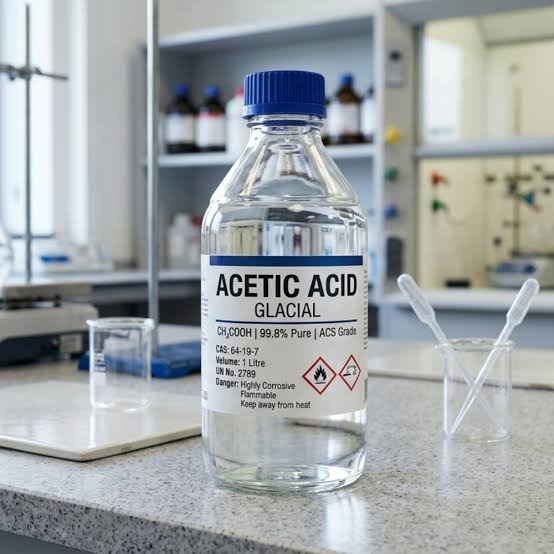
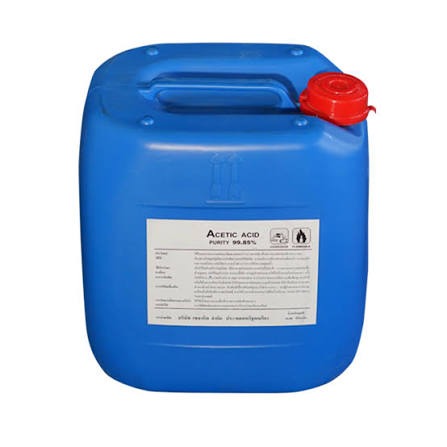
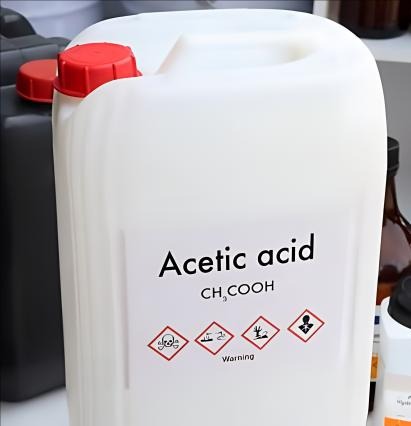
Bouling Group Co., Ltd supplies the Eastman acetic acid range, covering dilute industrial strengths from 56% to 95%, EastaPure™ high-purity electronic grade, and glacial grades for general, food, reagent and pharmaceutical uses. Selection starts with the concentration required at the point of use, because glacial and diluted materials behave differently in storage and transfer. Our team works from the published grade information for each product so that concentration, purity level and intended application are considered together.
Acetic acid is a basic chemical building block with the formula CH3COOH and CAS number 64-19-7. The glacial form is a clear liquid with a pungent odor, a freezing point of 16.6 °C and a boiling point of 117.9 °C at 760 mmHg. Those properties explain why some operations select a dilution: Eastman notes that many users prefer diluted acetic acid to avoid the expense of heated storage tanks.
Dilution series spanning 56%, 60%, 65%, 70%, 80%, 84%, 90%, 92% and 95%
Glacial options for general, food, reagent, pharmaceutical, feed and water treatment uses
High-purity EastaPure™ grade for semiconductor wet processing
Product Portfolio
Product Portfolio
Four families cover the most requested Eastman acetic acid grades, from bulk industrial dilutions to high-purity electronic material.
Undiluted Material
Glacial Acid, General
Eastman Glacial Acetic Acid, General is the undiluted material used as a starting point for many downstream chemical products. Glacial acetic acid freezes at 16.6 °C, so storage and transfer lines need a temperature plan before the material arrives. Its boiling point is 117.9 °C at 760 mmHg and its density is 1.049 g/cm³ at 20 °C.
Related grades in the same family address food, reagent, pharmaceutical, feed, low-metal and water treatment requirements. Choosing among them depends on the sensitivity of the process and the documentation expected by the receiving operation.
Industrial Dilutions
Dilute Acid, 95%
Eastman Dilute Acetic Acid, 95% Industrial grade is a high-strength aqueous solution for processes that need concentrated acidity without handling the pure acid. Eastman states that many users choose a diluted form to avoid the cost of heated storage tanks. This grade is part of one dilution series that also includes 92%, 90%, 84%, 80%, 70%, 65%, 60% and 56% strengths.
Intermediate strengths are useful when the process already adds water or when metering accuracy is easier at a lower concentration. Grade selection should account for the acidity required in the final formulation.
High Purity
EastaPure™ Grade
Eastman EastaPure™ Acetic Acid, Electronic grade, High purity is intended for semiconductor processes where contaminant control governs yield. The EastaPure line is tested for contaminants in the parts-per-billion and parts-per-trillion range and is stored in dedicated equipment. Use contexts include photolithography, wet etching, wet cleaning and packaging processes.
Eastman describes its EastaPure electronic chemicals as supported by on-site clean-room monitoring and in-house production controls. That approach matters when trace metal or particle levels influence device performance.
Regulated Uses
Food Grade Glacial
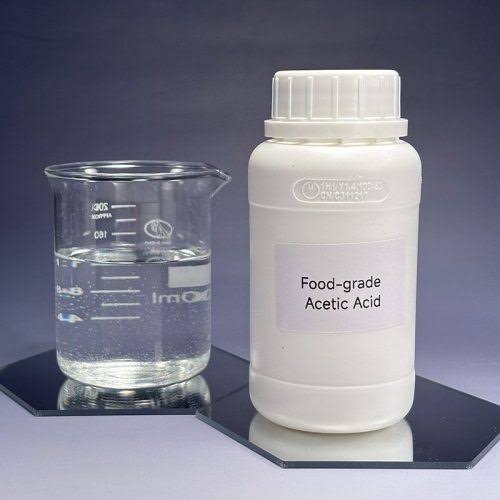
Eastman Glacial Acetic Acid, Food Grade and Glacial Acetic Acid-Food Grade serve food and beverage operations that need controlled acidity. Eastman states that its food-grade glacial acetic acid meets Food Chemical Codex requirements and is produced under appropriate current good manufacturing practices. Acetic acid is also used as a food additive.
Pharmaceutical, reagent and feed grades are separate options within the glacial family. Each carries its own specification focus, so the intended use should be identified before a grade is chosen.
Complete Grade List
All nineteen listed models are grouped below by dilution strength, electronic grade and glacial grade.
Dilute Grades
Dilute Acetic Acid 95%, Industrial grade
Eastman Dilute Acetic Acid, 92% Industrial grade
Eastman Dilute Acetic Acid, 90% Industrial grade
Eastman Dilute Acetic Acid, 84% Industrial grade
Eastman Dilute Acetic Acid, 80% Industrial grade
Eastman Dilute Acetic Acid, 70% Industrial grade
Dilute Acetic Acid, 65% Industrial grade
Eastman Dilute Acetic Acid, 60% Industrial grade
Eastman Dilute Acetic Acid, 56% Industrial grade
Electronic Grade
Eastman EastaPure™ Acetic Acid, Electronic grade, High purity
Glacial Grades
Eastman Glacial Acetic Acid, General
Eastman Glacial Acetic Acid, Food Grade
Glacial Acetic Acid-Food Grade
Glacial Acetic Acid-USP, Pharmaceutical grade
Eastman Glacial Acetic Acid, Reagent Grade
Glacial Acetic Acid-Low Metals
Glacial Acetic Acid-Feed Grade
Glacial Acetic Acid-Water treatment grade
Glacial Acetic Acid-Acetic Anhydride 40/60 Blend
Technical Specifications
Technical Specifications
The values below describe glacial acetic acid as a chemical substance and provide a reference point when comparing grades and dilutions.
Aqueous dilutions have different physical values from the pure substance; concentration is therefore the first specification to identify for any process.
Applications
Applications
Grade choice follows the process: purity-sensitive electronics work, regulated food production and general industrial synthesis each place different demands on acetic acid.
Electronics
EastaPure™ acetic acid is used where wet-process chemicals contact semiconductor surfaces. Eastman tests the EastaPure line at parts-per-billion and parts-per-trillion contaminant levels. Controlled storage and clean-room handling help keep material consistent from container to process.
Food & Beverage
Food-grade glacial acetic acid delivers a defined acidity for food ingredients and preservative uses. Eastman's food-grade material meets Food Chemical Codex requirements and is produced under appropriate current good manufacturing practices. The receiving operation should match the grade to its documented food-use requirement.
Industrial Synthesis
Acetic acid is a raw material for numerous downstream products and appears in applications such as intermediates, industrial cleaners, oil and gas processing and water treatment. Dilute strengths are selected when heated storage for glacial material is impractical. General, low-metal, reagent and pharmaceutical glacial grades give formulators additional selection points.
Grade Selection
Grade Selection
Four practical decisions keep acetic acid handling aligned with the process and with the properties of the chosen grade.
01
Define the process need
Start from the concentration required at the point of use. Glacial material supplies maximum acidity; dilutions from 56% to 95% reduce direct handling of the pure acid.
02
Plan storage temperature
Glacial acetic acid freezes at 16.6 °C, so temperature control is part of storage design. Eastman notes that diluted strengths help users avoid heated tanks.
03
Review grade documentation
Food, reagent and pharmaceutical uses each have a distinct specification focus. Check the grade specification and safety data sheet before material is received.
04
Control handling conditions
Acetic acid is corrosive to metals and tissue and has a closed-cup flash point of 39 °C. Use ventilation, compatible equipment and ignition-source control.
Storage & Delivery
Storage & Delivery
Delivery planning for acetic acid begins with concentration. Undiluted glacial material solidifies below 16.6 °C, so storage areas and transfer routes must respect that threshold. Diluted strengths are often selected specifically to simplify storage.
Keep containers closed and segregated from incompatible materials, and handle transfers where vapors can be controlled. Acetic acid's closed-cup flash point of 39 °C makes ignition-source control part of routine handling.
Before a grade is scheduled, verify that its specification matches the receiving process, whether that is a 56% industrial dilution, a 95% industrial dilution, EastaPure™ electronic grade or a glacial food grade.
Inquiry
Talk to Our Team
Tell us the grade and concentration your process needs and our team will respond with the relevant product information.
We cover the full Eastman acetic acid range, from 56% and 95% industrial dilutions to EastaPure™ electronic grade and food-grade glacial material. Reach Quinn Chai directly by phone, email, WhatsApp or Skype for grade selection and product information.